

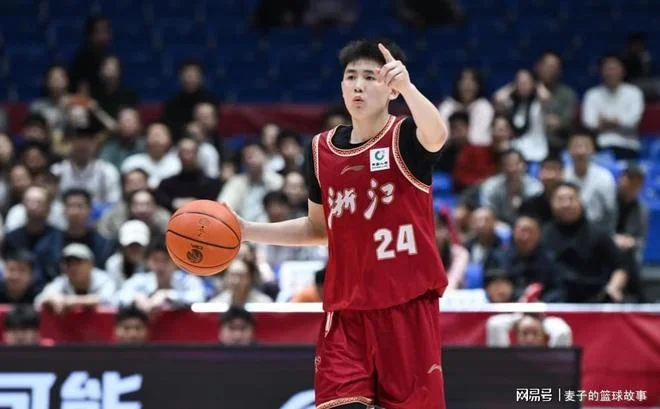
Li Yuezhou recently stated that the intensity of US high school basketball is not as high as that of the Chinese Basketball Association (CBA). He suggested that instead of playing in the US, young players should spend a few years in the CBA before attempting to enter the NCAA. On the surface, this argument holds some merit, but it overlooks the deeper reasons why young athletes choose to study and play abroad.
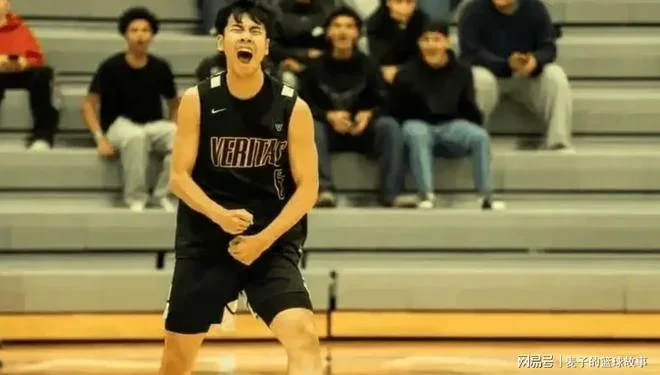
In terms of pure competition intensity, a league of high school students running around—no matter how physically gifted they are—cannot match a professional league full of grown men like the CBA, where every player has a financial incentive to perform. A good game can lead to a six-figure salary; a bad one could mean unemployment. The stakes are much higher compared to US high school games, where results have less immediate impact.
If the answer were that simple, then rather than having four out of 12 players on China’s U19 national team studying abroad, all 12 would stay home to play in the CBA and then collectively enter the NCAA a few years later. In reality, the four most talented and promising players of the U19 team chose to go abroad, while most of the remaining eight—except for a few like Li Yuezhou and Wang Hongze—are role players at best.
Sharp observers can see the pattern: those who go abroad are the elite, while those who stay are mostly players who couldn’t secure a spot overseas. They stay in the CBA to ensure a stable career and likely lack the ability to challenge the NCAA in the future.
Beyond a lack of ability or willingness to strive overseas, their understanding of US high school basketball is flawed. The purpose of US high school leagues is to filter talent for the NCAA and to develop players in the American basketball system. That means if a young international player truly wants to compete for an NBA roster or solidify a place in the NCAA, the best path is to spend a few years in US high school first, using that experience to gain entry into the NCAA.
Of course, it’s possible to enter the NCAA without playing US high school basketball, but it would be an extreme struggle. US high school basketball and the NCAA are sequential—like learning math: you cannot grasp 20 or 100 without first mastering single-digit addition. Forcing difficult problems results in consistent failure. What others find easy requires many times the effort to compensate for a weak foundation. US high school basketball is that foundation, and playing it means building the base needed to learn higher-level basketball concepts.
Li Yuezhou’s judgment that high school basketball is inferior to the CBA makes him miss the underlying logic. If he ever tries to enter the NCAA in a few years, he will regret today’s decision—but time won’t come back.

Losing time and the chance to build a foundation is not the only reason to feel sorry for players like Li Yuezhou. The bigger tragedy may be that after playing in the CBA for years, they will likely fail to meet NCAA standards when they finally go abroad. It’s not just that the CBA lacks sufficient competition intensity; it’s that local coaches’ understanding of basketball and player development remains stuck in the past.
Players who gain favor with domestic coaches rarely impress American coaches. Our domestic scoring champion Lin Wei struggled to score in the NCAA; our best defender Yang Hansen is considered a defensive liability in the NBA. The players our coaches praise for strictly executing tactics abroad appear slow-witted and robotic. When the criteria for “good” are completely opposite, it means our best players are worthless in their system.
That’s why Wang Junjie would rather transfer schools than return to the CBA, why Dan Houran left after a physical test, and why Zhang Boyuan never even considered playing domestically. Their sights are set on the NCAA and the NBA, and too much CBA exposure would only hinder their dreams.
Young players go abroad for more than just playing games. Growing in a high-intensity environment is essential to unlocking their full potential. This requires both time and a high level of understanding.
